From Precision Diagnosis to Scalable Impact: Squirrel Ai’s Joleen Liang Shares AI Education Practice at UNESCO Digital Learning Week

Table of Contents

From September 8 to 11, 2026, UNESCO Digital Learning Week was held at UNESCO Headquarters in Paris, France. Centered on the theme “Education in the age of AI: Facts | Frictions | Frontiers,” the event brought together ministers of education, senior experts, representatives from the technology industry, educators, and students from around the world.


On the opening day, more than 25 ministers of education and their representatives issued a joint statement calling for education to continue being protected as a human right and a common good in the age of artificial intelligence. The statement emphasized that “it is of no benefit to learning if artificial intelligence replaces human relationships and human judgment.” As one of the most influential multilateral platforms in global education, this year’s Digital Learning Week focused on frontier issues such as the rise of agentic AI, AI sovereignty, student and teacher agency, and the scaling of personalized learning.


The conference gathered a high-level lineup of global participants, including education ministers, senior experts, and representatives from the technology sector. Among them were Chen Qun, Assistant Director-General for Education at UNESCO and former President of East China Normal University; Amandeep Singh Gill, United Nations Under-Secretary-General; H.E. Ms Sarah Al Amiri, Minister of Education of the United Arab Emirates; Sal Khan, Founder and CEO of Khan Academy; Åsa Regnér, Deputy Director-General of UNESCO; and H.E. Mr Rodolfo De Carvalo Cabral, Deputy Minister of Education of Brazil.


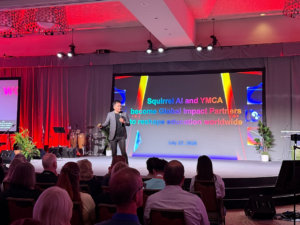
Squirrel Ai Co-founder and International CEO Dr. Joleen Liang was invited to attend the conference and delivered a keynote speech titled “From Precision Diagnosis to Scalable Impact: What AI Changes in Personalized Learning.”
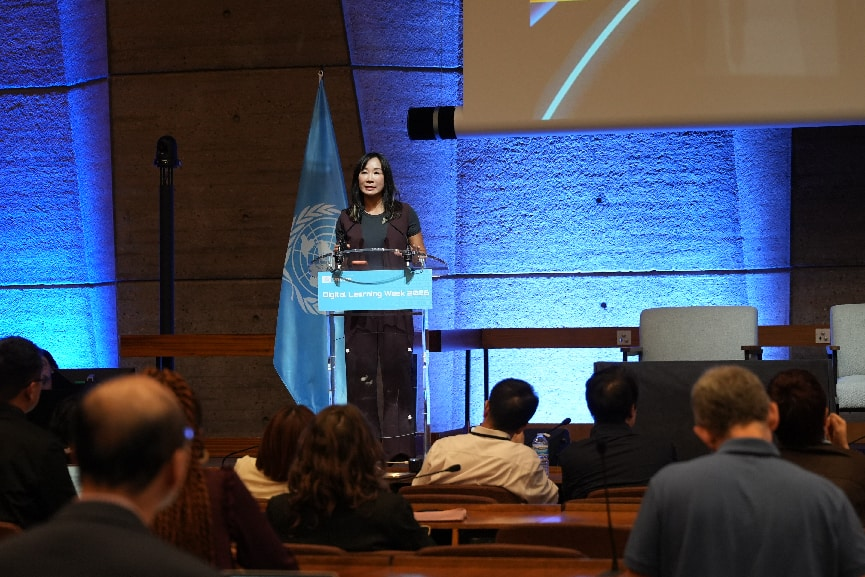
 

This year’s theme aimed to examine the real impact of AI in education, the practical barriers it faces, and its future directions. Key topics included the rise of agentic AI, AI sovereignty, student and teacher agency, and the scaling of personalized learning. Within this high-level forum, Dr. Joleen Liang’s participation and remarks enabled the global education community to better understand, from the frontlines of large-scale implementation, how AI can more effectively serve human development.


From Precision Diagnosis to Scalable Impact: The Core Logic of AI-Driven Personalized Learning

In her keynote speech, Dr. Joleen Liang focused on “From Precision Diagnosis to Scalable Impact: How AI is Transforming Personalized Learning,” directly addressing the long-standing scalability challenges in personalized education and offering new approaches to solving them.

In traditional models, personalized learning often relies on teachers manually adjusting instructional content. While this approach may work in small-scale settings, it is difficult to sustain at scale. Squirrel Ai argues that the key to overcoming this challenge lies in enabling AI to deeply understand the learning process and achieve precise diagnosis.
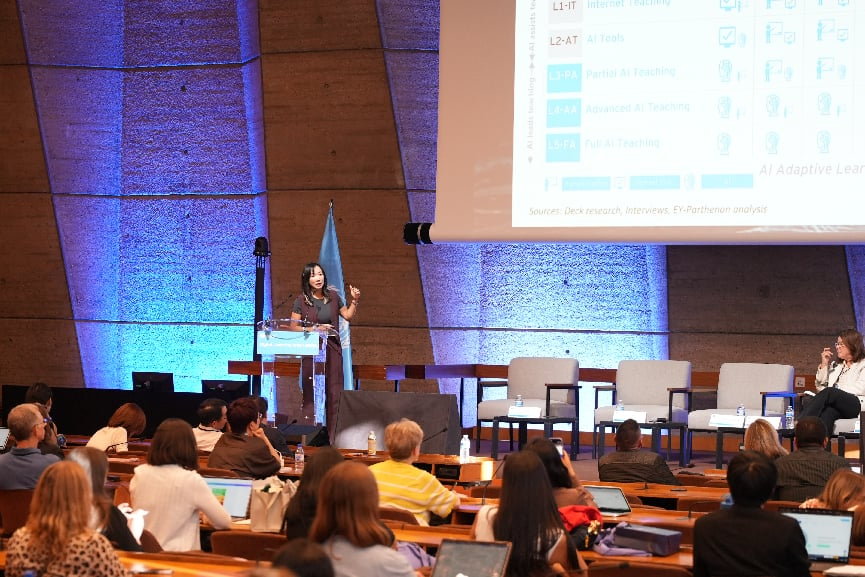
 

To this end, Squirrel Ai has developed a multimodal adaptive education large model powered by a fine-grained knowledge graph and multimodal data analytics. It not only identifies gaps in a student’s knowledge, but also traces those gaps back to underlying cognitive weaknesses, thereby dynamically generating individualized learning pathways.


This leap, from identifying “what is wrong” to understanding “why it is wrong”, makes personalized education less dependent on individual teacher experience and more scalable and replicable. Squirrel Ai’s MCM (Mode of Thinking, Capacity, Methodology) training system embodies this framework.


As AI tutors and intelligent agents continue to emerge, Squirrel Ai’s practice demonstrates that the key to scalability is not simply increasing computing power or user numbers, but ensuring that every learner receives precise, continuous, and cognitively meaningful support.


Human–Machine Collaboration and Educational Sovereignty: Value Choices in the Path to Scale

In the panel discussion, Dr. Joleen Liang joined guests from organizations including the OECD, MIT, and Stanford University in a dialogue on “Why is personalized learning difficult to scale, and what difference does AI make?”


The discussion focused on how AI can enable more precise and scalable personalized learning, particularly in understanding learning processes and diagnosing individual learning gaps, as well as how these technological capabilities can be translated into tangible impact across different education systems.


AI takes on tasks such as diagnosis, personalized instruction, and repetitive analysis, freeing teachers from heavy administrative and routine workloads. This allows educators to focus on emotional engagement with students, value guidance, and judgment and intervention in complex learning contexts. Within this human–machine collaboration model, both AI-driven education and the role of teachers are being redefined: AI serves as a “personalized learning engine” that provides deep insights, while teachers evolve into “learning strategists” and “mentors for life development.”
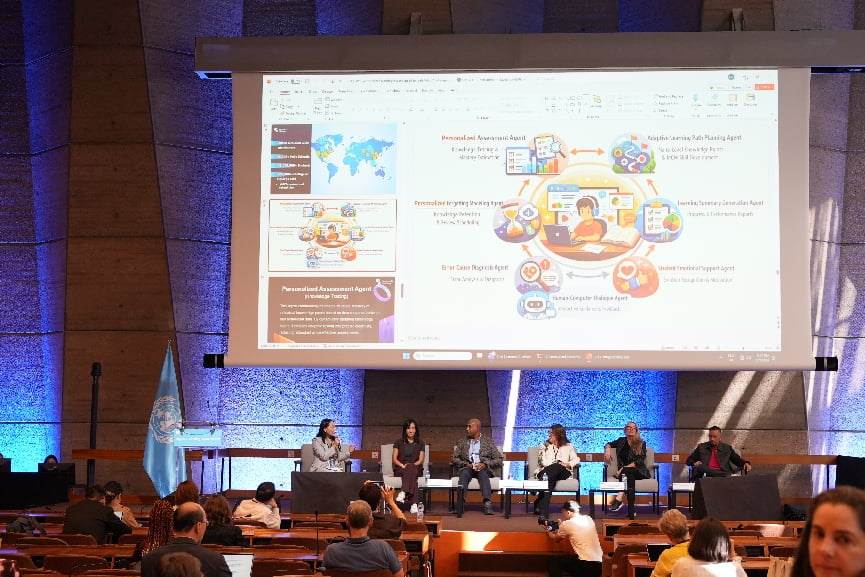
 

Facing emerging frontiers such as “agentic AI” and “frugal AI,” Squirrel Ai remains committed to a vertical domain-specific large model approach in education. From Squirrel Ai’s perspective, education requires precise, high-value domain-specific data, and the generalization capabilities of general-purpose models are insufficient to meet this requirement. At a time when AI sovereignty and human agency have become global topics of discussion, this strategic choice reflects a deeper commitment to the public nature of education and human development.


As artificial intelligence reshapes the global education landscape, the true transformation does not lie in technology itself, but in whether it can ensure that every learner is seen, understood, and empowered. Technology is becoming a strategic partner in unlocking human potential, and the ultimate goal of scalable personalization is to enable each learner to grow at their own appropriate pace.


Squirrel Ai’s practice demonstrates that the deep integration of AI and education is not merely an improvement in efficiency, but a contemporary realization of the long-standing educational ideal of “teaching students according to their aptitude.” This sharing highlights Squirrel Ai’s exploration at the forefront of educational technology, and its sustained focus on human development also provides an important reference for how global education can responsibly integrate intelligent technologies.

By Squirrel Ai Team

By Squirrel Ai Team

Find AI Self Study Center

Discover a smarter way to learn with personalized AI-powered guidance at a Squirrel Ai Self-Study Center near you.

Interested in learning more?

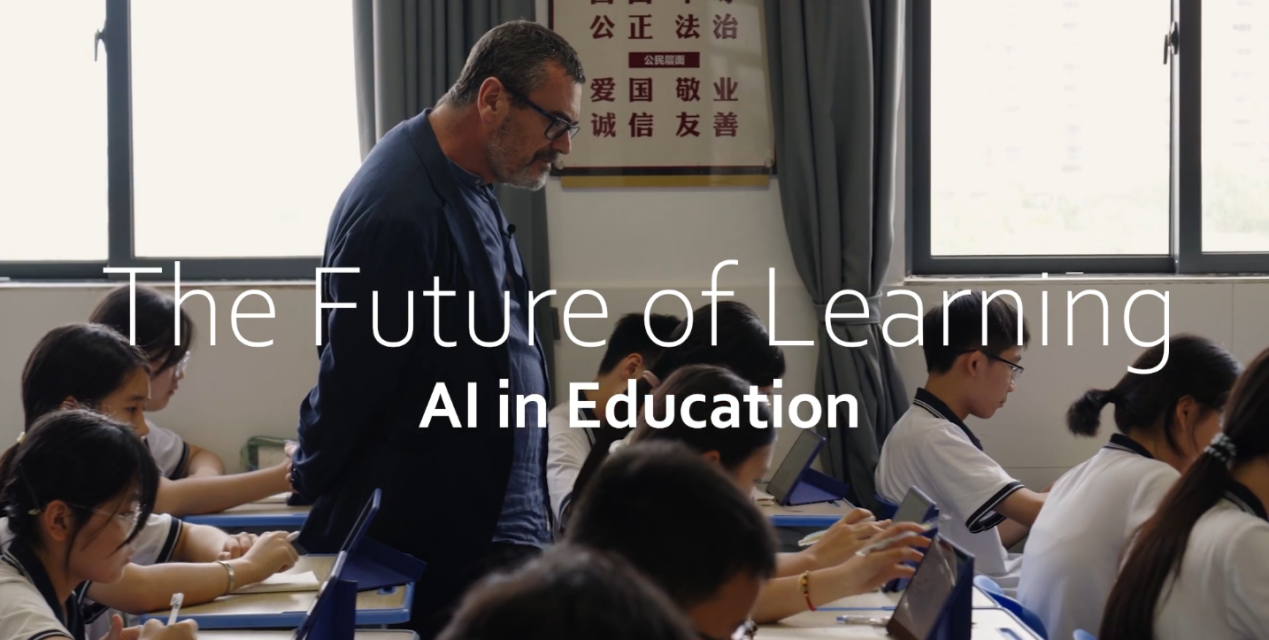
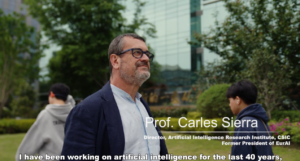
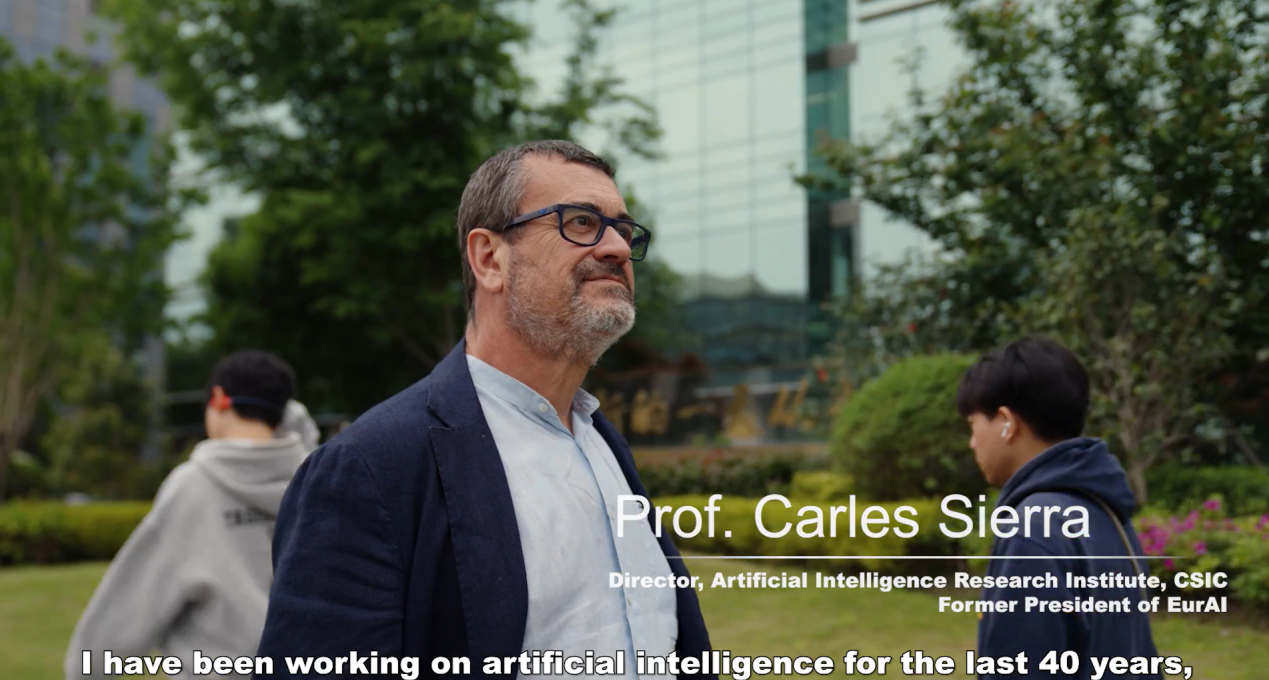
On August 24, 2026, People’s Daily Overseas Edition released an AI-themed documentary recording Professor Carles Sierra’s in-depth field study of real-world AI education applications in China. Professor Sierra is also Director of the Artificial Intelligence Research Institute in Barcelona, and has previously served as a council member and program chair of the International Joint Conference on Artificial Intelligence (IJCAI), one of the most prestigious academic conferences in the field of AI.


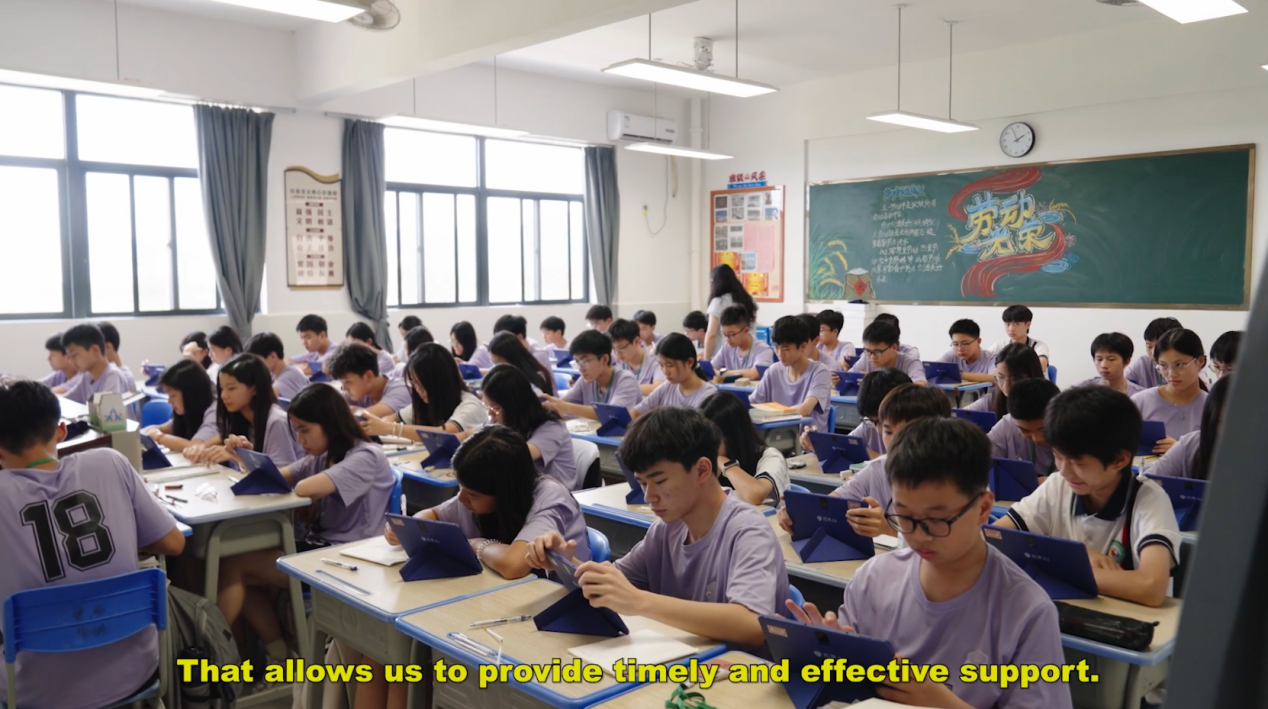
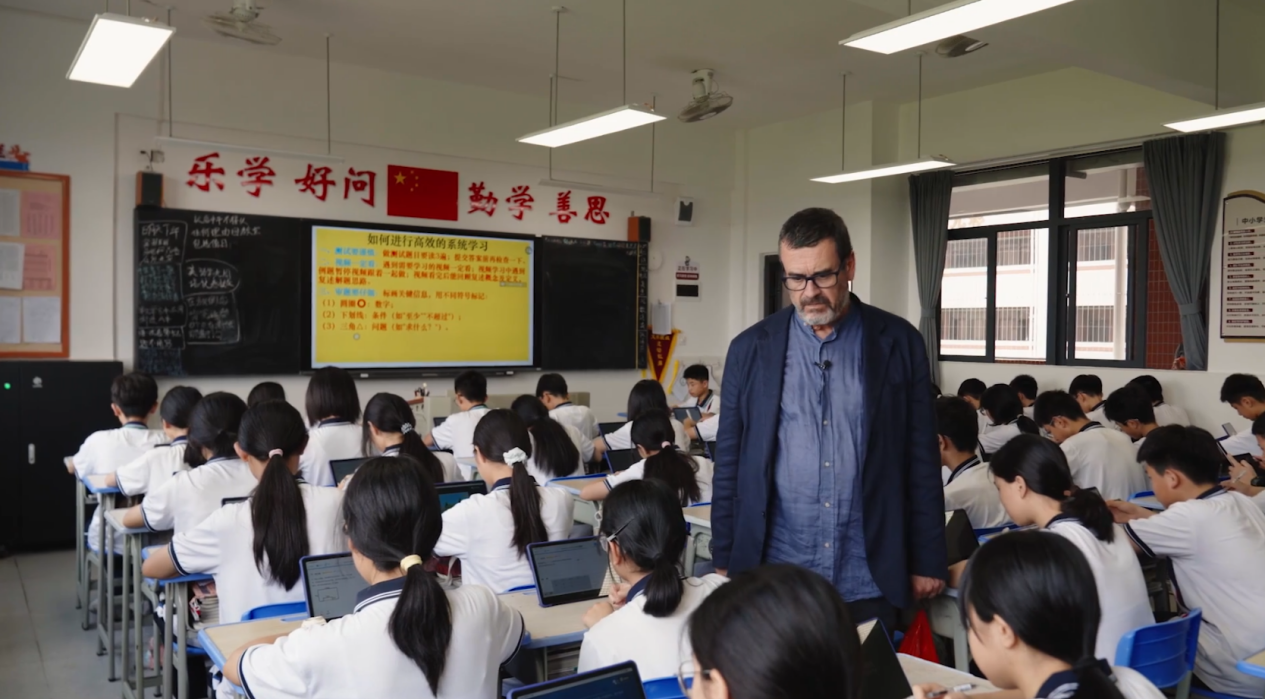
In addition, as a member of the IEEE working group on standards for large AI models in education, Professor Carles visited Shantou Keli Experimental School, an “AI Education 5A-Level Experimental Base” co-established with Squirrel Ai. The school is a representative case of Squirrel Ai’s large-scale application in China’s K-12 education system. He also visited Squirrel Ai’s intelligent self-study center in Tonglu, Hangzhou, where he closely observed the application of Squirrel Ai’s adaptive learning system in a self-directed learning environment, and engaged in discussions with students and supervising teachers. He gave high recognition to Squirrel Ai’s L5-level autonomous learning model and its outcomes.


“I have been researching artificial intelligence for the past 40 years, with a particular focus on its applications in education,” Professor Carles said in the documentary. “I came to China to see how AI is being applied in real educational practice.”


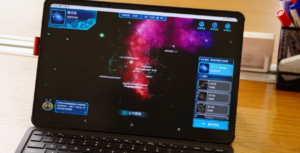
In the classroom at Keli Experimental School, Professor Carles observed a deeply integrated AI-powered education system embedded into daily teaching routines. After students complete diagnostic assessments on smart learning devices, Squirrel Ai’s adaptive system analyzes multimodal data, including response patterns, error types, and time spent per question, to infer each student’s knowledge mastery and precisely identify learning gaps. In doing so, Squirrel Ai is translating China’s centuries-old educational ideal of “teaching students in accordance with their aptitude” into a tangible model of future education.


During the field visit, a teacher demonstrated a scenario to Professor Carles Sierra: in traditional teaching, when a student’s answer is incorrect, teachers typically only mark it as right or wrong. However, Squirrel Ai’s educational logic goes far beyond binary evaluation. It combines each student’s learning profile to conduct personalized diagnosis, trace the root cause of the mistake, and identify the underlying knowledge gap. It then automatically delivers targeted explanations and practice exercises to help students address the issue at its source, preventing repeated errors of the same type.


In the discussion, teachers from Keli Experimental School also noted that all content recommendations generated by Squirrel Ai are fully driven by algorithms, requiring no manual intervention. From their perspective, AI serves as an assistive teaching tool. The core value of Squirrel Ai lies in providing teachers with precise learning analytics, enabling them to focus their energy on emotional engagement with students and guiding higher-order thinking skills. They emphasized that this level of autonomy does not diminish the role of teachers; rather, it redefines it.


Squirrel Ai’s Technological Depth

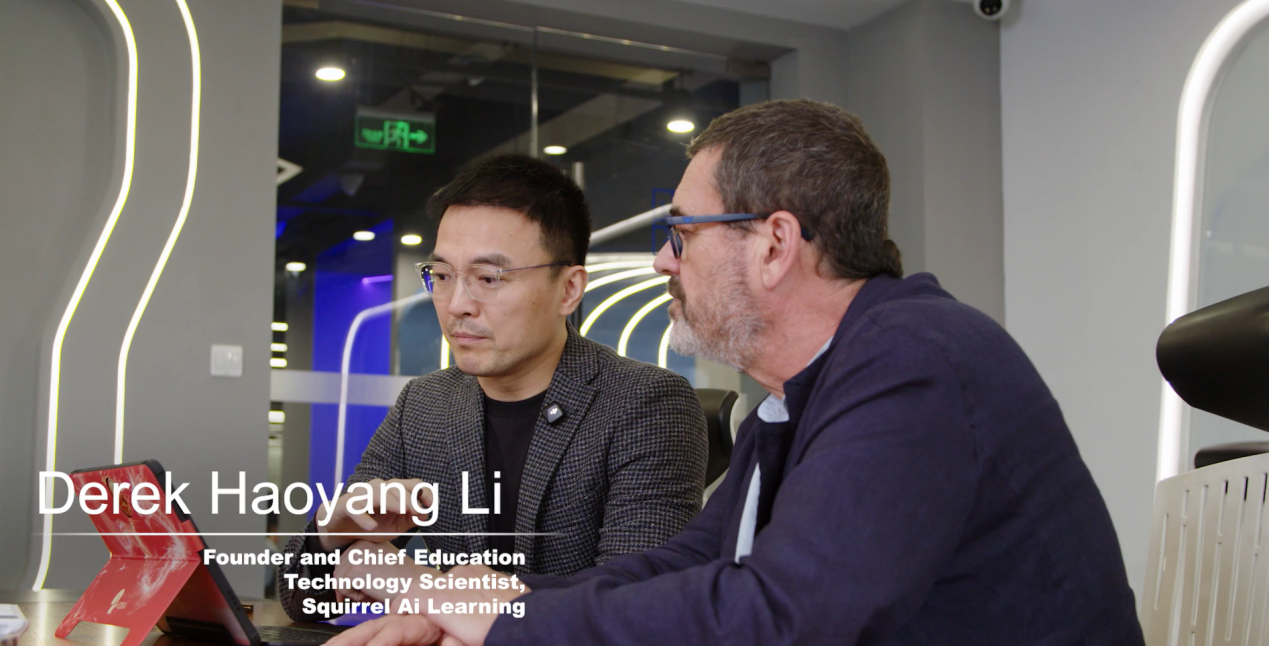
During the visit, Professor Carles Sierra held in-depth discussions with Squirrel Ai Chairman Li Haoyang. Li noted that Squirrel Ai’s multimodal adaptive education large model is built on a fine-grained knowledge graph architecture, which decomposes subject knowledge into micro-level cognitive units. This enables the system to construct a personalized knowledge profile for each student. Combined with a question bank of over 500 million items, designed with the participation of outstanding teachers and powered by AI systems capable of addressing massive individualized learning demands, the model is able to generate precisely tailored learning pathways for each student in large-scale educational settings, making truly personalized education possible.


Notably, in 2024, the IEEE Working Group on Standards for AI Large Models in Education was officially established, with Squirrel Ai founder Li Haoyang serving as its chair. The working group includes leading figures such as former Carnegie Mellon University School of Computer Science Dean Tom Mitchell, former President of the Association for the Advancement of Artificial Intelligence (AAAI) Bart Selman, President of the European Association for Artificial Intelligence Carles Sierra, Harvard Graduate School of Education Professor Chris Dede, former President of SRI International Stephen Ciesinski, as well as chief scientists and chief learning officers from leading global education organizations including Pearson, ETS, and Khan Academy.


This marks the first time a Chinese company has taken a leading role in shaping international standards for AI in education. It positions Squirrel Ai not only as a technology practitioner, but also as a co-architect of global industry standards.


A Model for Scaled Education

The AI-powered education scenario at Keli Experimental School represents one of Squirrel Ai’s large-scale validation pathways. To date, Squirrel Ai has served more than 43 million users, accumulated over 20 billion learning behavior data points, established more than 3,000 intelligent learning centers nationwide, and formed in-depth collaborations with over 60,000 public schools. This extensive user base and massive data accumulation enable Squirrel Ai’s multimodal adaptive education large model to continuously iterate in real-world teaching environments.


At Wenyuan High School in Liaocheng, Shandong Province, an experimental group of 84 students used Squirrel Ai’s multimodal adaptive education large model during two weekly math self-study sessions, while a control group of 198 students followed traditional instruction. Midterm exam results showed that the experimental group achieved an average score of 104.7 in the content they learned with Squirrel Ai, compared to 73.55 in the content not covered by Squirrel Ai, representing a 31.2-point difference (out of 120). These findings were published in the academic journal China Educational Informatization.


At Baishaping Primary School in Badong County, Hubei Province, Squirrel Ai introduced its multimodal adaptive education large model to provide targeted instruction for sixth-grade students over a one-month period. According to experimental results from CCTV’s program Super Brain, the students’ average math score increased from 56 to 89. These two cases demonstrate that across different conditions and educational stages, Squirrel Ai has delivered outcomes that are both verifiable and practically implementable.


As a representative of Chinese AI education companies entering the global stage of education standard-setting, Squirrel Ai’s exploration goes far beyond technology itself. It provides a replicable model for the digital transformation of basic education in China and contributes Chinese experience and solutions to the global development of AI in education.


On the path of empowering education through technology, Squirrel Ai has consistently adhered to its core mission: “help every child become a better version of themselves.” It ensures that technology serves human development, that intelligence safeguards the warmth of education, and that it leaves a meaningful imprint on the future shape of learning.

Contact Us

This field is for validation purposes and should be left unchanged.
Newsletter Opt-In